
Hope and Love for Blended Families and Stepmoms
Faith, Blended Families, Stepmoms
Above All, Love Each Other Deeply: Hope for Blended Families
“Above all, love each other deeply, because love covers over a multitude of sins.” — 1 Peter 4:8. For blended families and especially stepmoms, this verse is both a comfort and a challenge. Love is beautiful, but it can also feel complicated, slow, and costly. Yet God sees every quiet act of love you offer in the middle of that complexity.
The Emotional Complexity of Loving in Blended Families
Blended families are born out of stories that already carry history—divorce, loss, broken trust, or deep disappointment. You don’t start on a blank page; you step into a chapter that’s already in progress. That’s why loving in a blended family can feel emotionally complex. There’s love, yes, but also grief, loyalty conflicts, fear of rejection, and sometimes unspoken expectations from every direction.
When Peter calls us to love “above all,” he’s not talking about a shallow, easy feeling. He’s pointing to a deep, steady love that keeps showing up even when emotions are messy. In blended families, this often looks like choosing patience when you feel misunderstood, offering kindness when you feel left out, and staying present even when your heart feels fragile.
The Tenderness of Blended Families
Blended families carry a special tenderness. There are firsts that feel different—first holidays, first school events, first time everyone sits at the table together. Underneath those moments is a quiet question: “Will this work? Will we ever really feel like a family?” That vulnerability is sacred ground to God. He leans in close to the brokenhearted and those in transition, and He is gentle with families learning how to be new together.
💡 Gentle Reminder: Tender doesn’t mean weak. The softness you feel is often a sign of how deeply you care.
The Silent Weight Stepmoms Carry
Many stepmoms carry a silent weight. You love children you didn’t give birth to. You pour out time, energy, and emotion, often without the clear affirmation that biological moms might receive. You navigate schedules, shared custody, past hurts, and sometimes criticism from people who don’t see the whole picture. It can feel like you are always giving but never quite sure where you fit.
If that’s you, hear this: God sees you. He notices the extra drive to practice, the late-night worry, the prayers you whisper over a child who still calls someone else “Mom.” You may feel invisible, but you are not unseen by Him. Your quiet faithfulness is a living example of 1 Peter 4:8 in action.
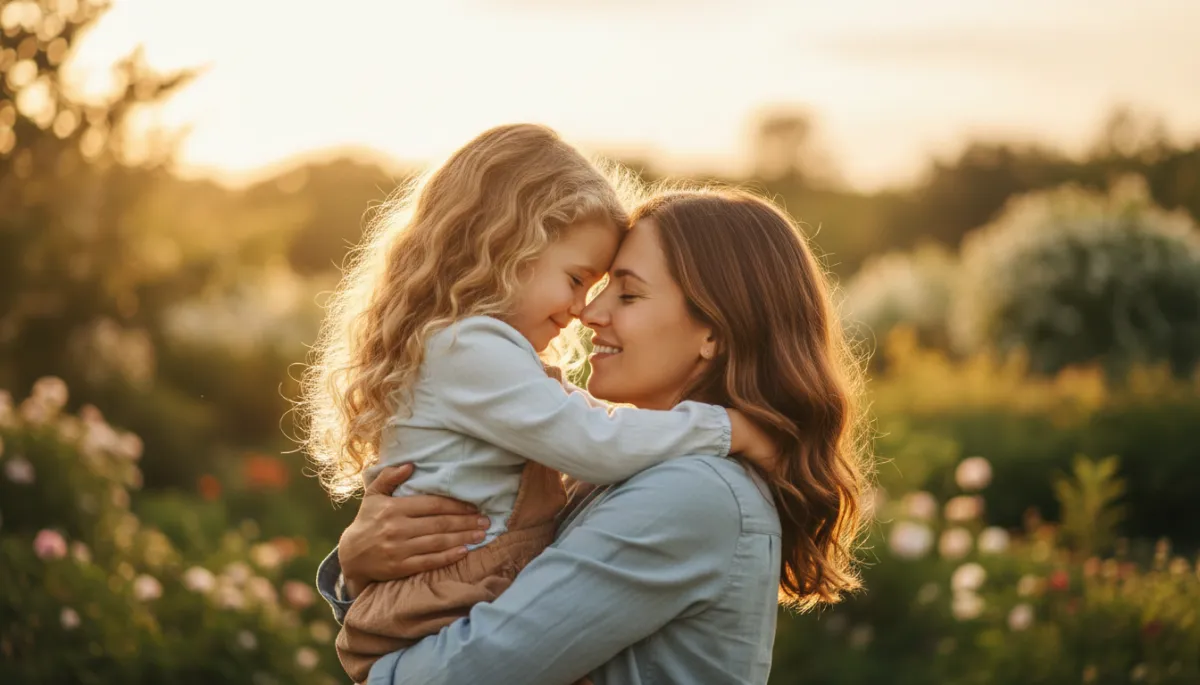
Small, everyday moments often become the quiet bridges of trust in blended families.
Letting Love Take Time to Grow
Deep love rarely happens overnight, especially in blended families. Children may feel torn between loyalty to their biological parent and openness to you. They might be warm one day and distant the next. That doesn’t mean you’re failing; it means they’re human. Real love is more like planting a garden than flipping a switch. It grows slowly, often underground, before you see visible fruit.
Give yourself and your family permission to be “in process.” Celebrate tiny signs of connection—a shared joke, a small hug, a text asking for help with homework. These are seeds of love, and God is patient with the pace of growth.
Avoiding the Comparison Trap
Comparison is a quiet thief in blended families. You might compare yourself to the biological mom, to other stepmoms, or to the “perfect” families you see at church or online. But God didn’t call you to be her; He called you to be you, in this family, with these children, at this moment in time. Your story will look different, and that’s okay.
When comparison starts to whisper, return to 1 Peter 4:8. The measure isn’t, “Do I look like the ideal mom?” but, “Am I choosing to love deeply today?” Love, not perfection, is the standard God uses.
Motherhood Through Grace, Not Performance
Stepmotherhood—and motherhood in any form—is not a performance to impress God. It’s a calling you live out through grace. You will make mistakes. You will say the wrong thing, misread a situation, or feel resentment rise up when you wish it wouldn’t. Grace means you can bring all of that to Jesus and start again, covered by His love that already “covers over a multitude of sins.”
Motherhood through grace says, “I don’t have to get this perfect to be used by God. I just have to stay surrendered, honest, and willing.” As you receive His grace, you’ll find you have more grace to extend—to your spouse, to the kids, and even to yourself.
Faith in the Middle of Family Complexity
Faith doesn’t remove the complexities of blended family life, but it changes how you walk through them. Instead of carrying everything alone, you invite God into the hard conversations, awkward transitions, and painful misunderstandings. You can pray over court dates, handoffs in parking lots, and tense holiday planning, trusting that God is present in all of it—not just the pretty moments.
📌 Key Takeaway: Faith doesn’t erase the mess; it anchors you in the middle of it.
The Beauty of Intentional Love—and God’s Quiet Applause
Intentional love is rarely flashy. It looks like showing up to the game even when you’re not sure you’ll be acknowledged, writing a note of encouragement, or choosing to listen instead of defend yourself. These small decisions, repeated over time, create a healing space where hearts can soften and trust can slowly build.
God recognizes every effort you make to love faithfully. Even when it feels unnoticed on earth, heaven keeps careful record. Your deep, imperfect, persistent love is never wasted. In His hands, it becomes part of the story He is writing—a story where love, rooted in Him, really does cover a multitude of sins and gently mends what once felt beyond repair.
So, to every woman loving in a blended family: keep going. You are not alone, you are not unseen, and your love—anchored in God’s love for you—has more power than you can see right now.